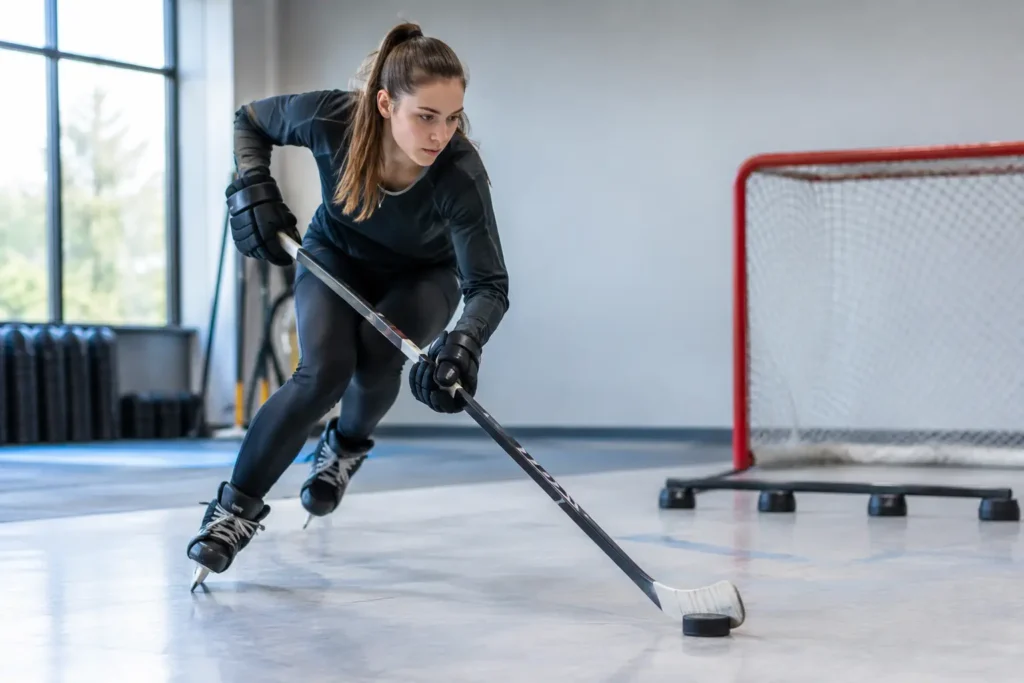
A player can take 200 purposeful shots in the time it takes a crowded team practice to rotate through one drill. That is the advantage of synthetic ice hockey practice when it is coached with a clear plan: more contact with the puck, more useful correction, and more confidence built through repetition.
For young players, practice time is often limited by ice availability, shared drills, and the natural pace of a team session. Those practices matter, but they cannot always provide the individual attention needed to rebuild a shooting release, improve puck protection, or correct a technical habit before it becomes automatic. A dedicated synthetic-ice environment creates space to slow the skill down, identify the issue, and repeat the right movement until it feels natural.
What Synthetic Ice Hockey Practice Can Develop
Synthetic ice is not a replacement for skating on a rink. The glide, edge feel, and resistance are different, and players still need regular ice time to develop balance, transitions, and game-speed skating. Its value is in what it makes possible away from a full sheet: high-volume skill work without waiting in line or chasing loose pucks across the ice.
For shooters, that means repeated work on hand position, puck placement, weight transfer, blade contact, and follow-through. A player who shoots off the heel, opens the blade too early, or loses balance through the release can receive immediate correction and try again within seconds. The coach is not simply counting shots. They are making sure each rep supports a better movement pattern.
Synthetic ice is also effective for puck control and offensive skill development. Athletes can work on receiving passes cleanly, moving the puck laterally before a release, changing shooting angles, and keeping their hands active while their eyes stay up. These skills transfer best when players understand the purpose behind the drill. A quick-release shot is not just about speed. It is about getting the puck away before a goalie or defender has time to set.
Repetition Only Works When the Details Are Right
Parents often hear that their player needs more reps. That is true, but more reps of poor mechanics can reinforce the very habit an athlete is trying to fix. A player who practices a weak wrist shot 100 times may become more comfortable with a weak wrist shot.
Quality repetition starts with observation. Coaches need to see where the player begins, how the body moves through the skill, and what happens at the point of contact. Is the puck too far behind the body? Is the player transferring weight through the front leg? Are the hands separating at the right time? Does the finish match the intended shot?
Then comes a correction that is specific enough for the athlete to use. “Shoot harder” is not a useful instruction for most young players. “Start the puck closer to your back foot, load the stick, and finish through the target” gives the player a sequence they can feel and repeat.
This is where small-group and private training make a meaningful difference. In a 2:1 player-to-coach setting, with no more than four athletes in a session, coaches have time to demonstrate a movement, watch the player perform it, and adjust the next rep. The player is active for most of the hour, not standing at the back of a line hoping to remember one piece of feedback.
Video Turns a Feeling Into a Clearer Picture
Young athletes do not always recognize what their body is doing. A player may feel as though they are loading their stick properly, yet video may show that their hands are barely moving or their weight is drifting away from the shot.
Immediate video analysis helps close that gap. Seeing a shot or skating movement on a screen gives the athlete a reference point, while the coach can connect the image to a simple adjustment. This is especially valuable for players who learn visually and for older athletes preparing for more demanding levels of competition.
The goal is not to overcomplicate every movement. It is to give athletes a clear picture of one or two priorities, then let them apply those priorities through purposeful reps. Technical development becomes more effective when players know what they are changing and why.
A Better Way to Structure a Session
The strongest synthetic-ice sessions are not random shooting contests. They should move from technical control toward decision-making and game relevance.
Start with a brief assessment or warm-up that reveals the player’s current habits. A coach may use stationary shooting, puck handling, or a simple passing pattern to see how the athlete holds the stick, tracks the puck, and creates power. From there, the session can target one primary skill rather than trying to fix everything at once.
A player working on a wrist shot might begin with controlled puck placement and a balanced finish. Once that movement improves, the drill can add a pass, a lateral pull, or a change of angle. The final progression may ask the athlete to identify a target and release quickly, closer to what happens in a scoring area.
For advanced players, the details become more demanding. They may work on deception before the release, shooting in stride, changing the release point, or moving the puck through a defender’s lane. The skill is still built from the same foundation, but the execution must hold up at greater speed and under greater pressure.
Where Synthetic Ice Fits Into a Player’s Week
The best training plan depends on the athlete’s age, schedule, current needs, and on-ice workload. A beginner may benefit most from learning how to hold the stick, receive a pass, and make clean contact with the puck. A U15 player or junior prospect may need focused work on shot efficiency, deception, and the ability to execute after fatigue.
For many families, one focused off-ice session per week can provide a useful development anchor during the season. It gives the athlete a place to address a specific weakness without sacrificing valuable rink time. During the off-season, synthetic-ice work can be paired with skating treadmill training, strength development, and on-ice sessions to maintain skill feel while building more power and speed.
Consistency matters more than occasional marathon sessions. Fifteen thoughtful minutes of puck handling at home can support a coached session. A player can rehearse a grip, practice handling with their head up, or make a small number of deliberate shots if they have a safe setup. But home practice works best when it supports a technical plan, rather than becoming a collection of rushed reps.
What Parents Should Look For
When choosing an off-ice training environment, look beyond the number of shots advertised. Ask whether the coach can explain what the player is working on, how progress will be measured, and how the skill connects to game performance.
The facility matters too. A dedicated synthetic-ice shooting lane and skills area allow for realistic puck movement and structured progressions. Space for immediate video feedback adds another layer of learning. At Pro Stride Hockey, these tools are used to support individualized coaching, not to replace it. Equipment creates opportunity; knowledgeable instruction turns that opportunity into development.
A good coach also protects the athlete’s confidence. Correction should be direct, but it should leave players believing they can improve. When young athletes understand that a mistake is information, they become more willing to try, adjust, and stay patient with the process.
Make Every Rep Carry a Purpose
Synthetic ice gives players access to something hockey development always needs: time with the puck. Used well, that time can sharpen mechanics, build better habits, and help athletes arrive at the rink ready to play faster and with more confidence.
The next time your player practices off ice, give the session one clear target. A better release, softer hands on a pass, or stronger body position is enough. Focused work, honest feedback, and repeatable effort will carry much farther than simply taking more shots.