A productive summer is not about keeping a player busy until tryouts return. It is an opportunity to correct the small habits that limit speed, shooting power, and confidence during the season. The right summer hockey camp Edmonton athletes choose should give them focused repetitions, clear coaching, and a training plan that translates to real shifts.
For young players, team practices can move quickly. Coaches must manage a full roster, install systems, and prepare for the next game. Individual stride flaws, puck-position details, and shooting mechanics often receive only a few minutes of attention. Summer creates room to slow those skills down, build them correctly, and repeat them with purpose.
What a Summer Hockey Camp Should Deliver
A strong camp is more than drills, sweat, and a full schedule. Players need to understand what they are working on, why it matters, and how to repeat the movement when a coach is not standing beside them. That requires instruction that is technical, encouraging, and adapted to the athlete in front of the coach.
Skating is a clear example. A player may work hard yet lose speed because their stride is too short, their recovery is inefficient, or their body position shifts outside a powerful skating lane. Simply telling that player to “skate harder” will not fix the issue. They need a coach to identify the breakdown, demonstrate the correction, and provide enough quality repetitions for the new movement to feel natural.
The same is true in shooting. A harder shot does not come from swinging harder at the puck. It comes from stable posture, correct hand placement, weight transfer, stick loading, puck position, and a release that fits the situation. Camp training should help players develop those details rather than chase a number on a radar gun without a technical foundation.
Why Individual Feedback Changes Development
Camp size matters. Large groups can bring energy and competition, but they can also limit the number of meaningful touches and individual corrections each player receives. For a player learning a new movement pattern, repeating the wrong technique at high volume can reinforce the exact habit they are trying to change.
Small-group instruction creates a different training environment. Coaches can observe how an athlete moves, explain one or two priorities at a time, and make adjustments before the player moves on. The athlete stays active, but the work stays intentional.
At Pro Stride Hockey, private instruction maintains a 2:1 player-to-coach ratio with no more than four athletes in a session. That structure gives players room to ask questions, make mistakes, and receive immediate direction without getting lost in a line. It also helps coaches progress a drill when a player is ready rather than holding them to a one-size-fits-all pace.
Video feedback adds another layer. Many athletes understand a correction when they hear it but do not fully recognize the movement until they see it. Immediate video analysis can show a player where their stride breaks down, how their body angle changes through a turn, or why their release is pushing wide. That visual connection builds awareness, which is a major part of long-term improvement.
Building Better Skating During Summer Training
Speed is not just about straight-ahead effort. Game speed includes starting quickly, controlling edges, maintaining posture through transitions, accelerating out of turns, and recovering efficiently between strides. A player with clean mechanics can apply more force with less wasted motion.
A focused camp environment can target these skills through skating treadmill work, movement drills, and technical coaching. The treadmill is especially valuable because it allows athletes to repeat a stride pattern at a controlled pace while a coach watches closely. Instead of rushing through a drill once or twice, players can spend meaningful time improving knee drive, extension, recovery path, arm action, and body position.
The goal is not to make every player skate the same way. Athletes have different body types, mobility levels, and development stages. Younger players may need to build balance and confidence on edges first. Advanced players may need more explosive starts, faster transition mechanics, or better efficiency at high speed. Good coaching recognizes those differences while still teaching the principles that create power.
Repetition Only Works When It Is Purposeful
More repetitions are valuable only when the athlete knows what to focus on. A player working on stride length might complete a set of skating work with attention on full extension and controlled recovery. Another may focus on keeping their chest stable as they accelerate. One clear cue, reinforced over quality repetitions, is more useful than five corrections competing for attention.
That approach also protects confidence. Players should be challenged, but they should leave training knowing what improved and what comes next. Development is rarely a straight line. A technical adjustment can feel awkward before it becomes automatic, especially for athletes who have relied on the same habits for several seasons.
Shooting Training That Carries Into Games
Shooting practice should prepare players to score in the space and time available during a game. That means developing a reliable foundation first, then adding decision-making, deception, and different release options.
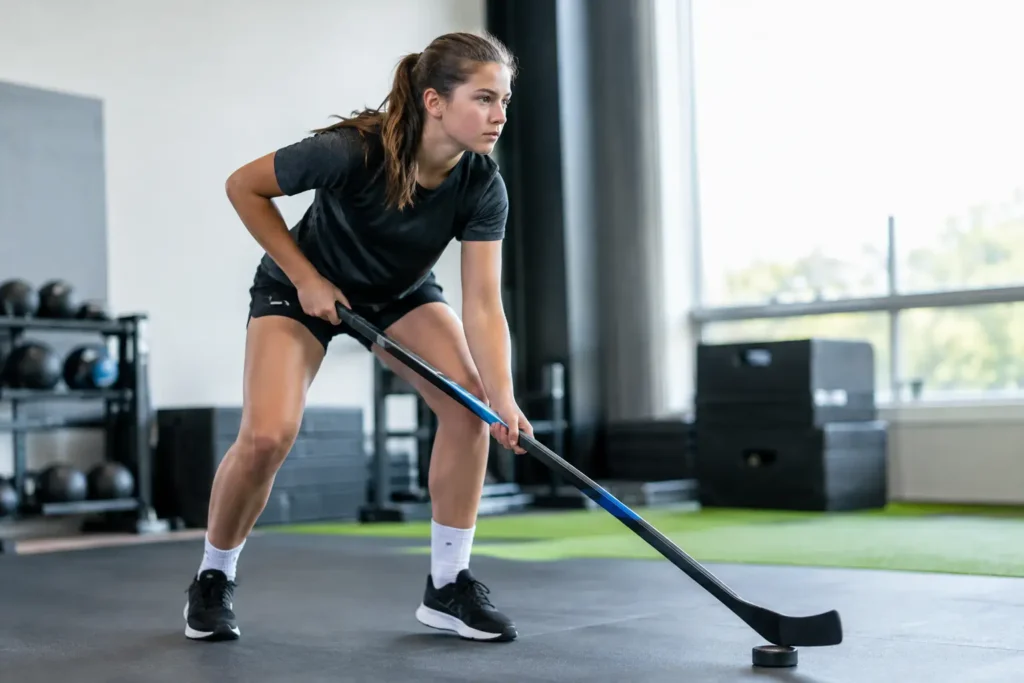
Synthetic-ice shooting lanes make it possible to build high-volume, game-relevant repetitions without waiting for ice time. Players can work on wrist shots, snap shots, puck movement, receiving passes, changing release points, and shooting in stride. Coaches can also adjust the challenge based on the athlete’s age and experience. A newer player may need to learn how to load the stick and finish toward the target. An advanced player may need to disguise their release or get the puck off the blade more quickly.
Shooting-only sessions can be especially useful for players who want targeted work outside of a broader camp schedule. The trade-off is simple: specialized shooting instruction develops one area deeply, while a full camp format can create a more balanced blend of skating, puck skills, and shooting. The best choice depends on the player’s current needs and the goals their family has set for the summer.
Choosing a Summer Hockey Camp in Edmonton
Parents should look past the camp name and ask practical questions. How many athletes train with each coach? Is there a clear skill focus, or is the schedule mostly games and general activity? Will the player receive feedback they can understand? Does the environment challenge them without making them afraid to make mistakes?
Facility design matters as well. A purpose-built training center gives coaches the tools to teach details that are difficult to address in a crowded rink. Skating treadmill training, immediate video review, a synthetic-ice shooting lane, and a dedicated skills area can support more efficient work when they are used with a clear coaching plan.
It also helps to choose a camp that fits the player’s stage of development. A first-time minor hockey player may benefit most from balance, coordination, puck control, and a positive introduction to structured training. A U15 athlete preparing for a competitive season may need stronger skating mechanics, more powerful shooting, and training that demands greater accountability. Junior prospects may need highly specific work that addresses the limiting factor in their game.
The camp does not need to solve every development need in one week. In fact, the most effective summer plans often combine focused camp work with rest, outdoor activity, family time, and enough recovery to keep the athlete motivated. More training is not automatically better. Consistent, well-coached training is what produces useful progress.
Make Summer Work Show Up in September
The value of a summer hockey camp is measured when the player returns to the ice. Do they accelerate with more confidence? Can they use a cleaner release under pressure? Do they recognize and correct a technical mistake before it becomes a habit? Those are the changes that make training worthwhile.
Parents can help by asking their athlete what they worked on after each session. Keep the conversation simple: What felt better? What was challenging? What is one detail to remember next time? This encourages ownership without turning the drive home into another coaching session.
A strong summer program gives players more than a temporary boost. It gives them a clearer understanding of how to train, how to respond to feedback, and how disciplined effort creates better performance. When September arrives, that player should not just feel like they worked hard. They should feel ready to show what they built.