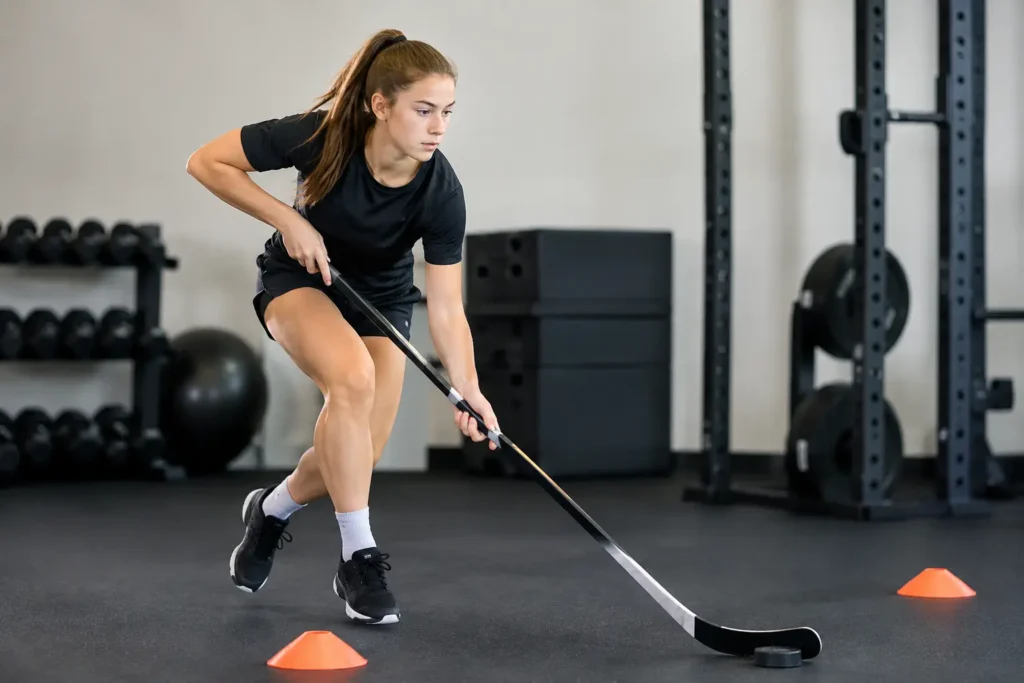
A player can work hard at every team practice and still repeat the same inefficient stride, release, or puck-handling habit for months. That is where private coaching value becomes clear. It is not simply extra ice time or more drills. It is focused instruction that identifies what is holding an athlete back, explains the correction in language they understand, and gives them enough quality repetitions to make that correction stick.
For hockey families, the question is rarely whether a player needs more effort. Most young athletes are already trying. The better question is whether their effort is aimed at the right detail. A private training environment gives players the attention, feedback, and structure that are difficult to deliver in a full team practice.
What Private Coaching Value Looks Like in Hockey
The value of private coaching starts with attention. In a busy practice, a coach must manage a full roster, teach a team concept, keep drills moving, and prepare players for the next game. Individual skating or shooting mechanics can only receive so much time. A player may hear, “Get lower,” or “Move your feet,” but not understand what their body needs to do differently.
Private instruction narrows the focus. A coach can watch the athlete’s knee bend, ankle position, hip extension, arm drive, puck placement, and release point. Instead of offering a broad cue, they can isolate the issue: the player may be pushing backward instead of laterally, losing power through an unstable knee, opening the blade too early, or transferring weight before the puck is loaded.
That distinction matters. Vague advice can motivate a player, but specific feedback gives them a practical adjustment. Once the athlete understands the movement, repetitions have a purpose.
At Pro Stride Hockey, private sessions are built around a 2:1 player-to-coach ratio and a maximum of four athletes. That format gives players room to work while allowing coaches to step in quickly, demonstrate the correction, and reinforce it before an old habit takes over again. The player is not waiting at the back of a long line hoping for one quick comment.
Better Repetitions Create Better Habits
Hockey development is built on repetition, but volume alone is not enough. Repeating a flawed movement can make that movement more automatic. A player who practices an inefficient stride hundreds of times may become very consistent at losing speed. A player who fires pucks without correcting their hand position may add shots without adding velocity or accuracy.
Private coaching turns repetition into deliberate practice. The athlete works on one skill with a clear objective, receives a correction, and immediately tries again. That loop is where progress happens: attempt, feedback, adjustment, repetition.
For a younger player, the focus may be foundational body position, balance, and confidence with the puck. For an experienced player, it may be improving first-step power, adding deception to a release, or creating a faster shot under pressure. The training changes because the player’s needs change.
This is also why one-hour sessions can be so productive. With a plan and limited distractions, athletes spend more time moving, handling pucks, shooting, and learning. They are not just staying busy. They are building a movement pattern that can hold up when the pace rises.
Immediate Feedback Shortens the Learning Curve
Players often feel that something is different before they can see why it is different. Video analysis helps connect the feeling to the movement. When athletes can view their stride or shot immediately, they can compare what they intended to do with what actually happened.
A 55-inch display gives coaches and players a useful teaching tool, especially for details that move too quickly to catch in real time. A player may believe they are driving through their stride, only to see that their recovery leg is slow. Another may think they are shooting off the correct leg, but video shows their weight staying behind the puck.
The goal is not to overwhelm athletes with technical language. It is to give them one or two clear changes they can apply right away. Young players benefit from simple cues and visible proof. Advanced players benefit from a more detailed understanding of how mechanics affect speed, balance, power, and efficiency.
Why the Training Environment Matters
Skill development improves when the environment supports the skill being taught. A purpose-built facility allows training to stay focused instead of constantly adapting around crowded ice, weather, or limited space.
A skating treadmill provides an opportunity to study stride mechanics at a controlled pace. Coaches can observe body position and edge work closely while athletes develop better habits through repeated movement. The benefit is not simply skating harder. It is learning to produce force in a more efficient direction.
A synthetic-ice shooting lane creates the same kind of focused opportunity for shooting mechanics. Players can work through puck position, lower-hand control, weight transfer, blade contact, and follow-through without spending most of the session retrieving pucks or waiting for their turn. In a dedicated skills area, players can also build puck control, coordination, and confidence in tight spaces.
There is a trade-off to consider. Off-ice training does not replace the decision-making, contact, and unpredictable timing of live hockey. Players still need team practices and games. But technical development is often easier to teach away from the chaos of a game situation. The strongest development plan uses both: focused training to build the skill and on-ice play to apply it.
Confidence Comes From Evidence, Not Empty Praise
Parents often notice confidence before they notice a specific mechanical change. A player starts asking for the puck, takes more shots, attacks a defender instead of avoiding them, or recovers more quickly after a mistake. That confidence is not accidental.
Real confidence comes from evidence. When players feel a stronger stride, see a harder shot, or recognize that they can execute a move repeatedly, they begin to trust their ability. Supportive coaching is a major part of that process. Athletes need to be challenged, but they also need a coach who can correct them without making them afraid to fail.
Private coaching creates a useful setting for this. Players can make mistakes, receive patient instruction, and try again without feeling lost in the group. For athletes returning from injury or rebuilding a skill that has become frustrating, that individualized support can be especially valuable.
Emotional maturity matters in hockey. Players will face bad shifts, missed chances, tough evaluations, and competition for roles. Training should help them learn that a correction is not a criticism of who they are. It is information they can use. That mindset helps athletes become more resilient on the ice and more coachable over time.
Choosing the Right Time for Private Training
Private coaching is not only for elite players or junior prospects. It can be valuable at almost any stage when a player has a specific need and is ready to listen, work, and repeat.
A young athlete may benefit from learning sound skating and puck skills before inefficient habits become deeply ingrained. A player in minor hockey may need extra support because team practice time is limited or their confidence has dipped. A competitive athlete may want targeted work before tryouts, during the offseason, or while pursuing a higher level of play.
The right frequency depends on the athlete’s goals, schedule, current workload, and ability to practice between sessions. More training is not automatically better if it leaves a player tired, frustrated, or unable to absorb feedback. Consistent, high-quality work usually produces more than an intense burst followed by a long gap.
Parents should also look for coaching that explains the plan. A good session should have an identifiable purpose, whether that is stride efficiency, shooting power, puck control, or movement quality. Players do not need a complicated program. They need a clear next step and a coach who knows how to progress it.
The Long-Term Return Is a More Capable Player
The strongest return on private coaching is not one flashy drill or a single great session. It is a player who moves with more efficiency, understands their own mechanics, and has the confidence to use their skills when a game gets fast.
When instruction is personal, repetitions are purposeful, and feedback is immediate, athletes stop guessing at how to improve. They begin building the habits that make every practice, game, and future training session more productive. Give your player a focused place to learn, make adjustments, and earn the confidence that comes from real progress.