Last Updated: November 12, 2026
Quick Summary
A hockey recovery routine for high performance covers five areas: sleep, hydration, food, active recovery, and rest days. Start with a five-to-ten-minute cool down, sip fluids right away, and eat a small snack within 30 to 60 minutes. Then foam roll, stretch, eat a full meal, and protect sleep.
- Cool down for five to ten minutes until breathing is close to normal.
- Eat a small snack with carbs and protein within 30 to 60 minutes.
- Foam roll quads, glutes, and calves for five to ten minutes.
- Hold light stretches for hips, groin, and ankles 20 to 30 seconds.
- Keep a 20-minute nap short and early so bedtime stays easy.
Table of Contents
- What a Hockey Recovery Routine Should Include
- Your Hockey Post-Game Recovery Routine, Step by Step
- Active Recovery for Hockey Players: What Works and What Doesn’t
- Building a Hockey Recovery Day Workout
- Hockey Player Sleep and Recovery: The Foundation
- Hydration, Nutrition and Rest Days Across the Week
- How to Tell When You Are Ready to Train Again
- Pairing Off-Ice Recovery With Skating and Shooting Development
- Frequently Asked Questions
What a Hockey Recovery Routine Should Include
A hockey recovery routine for high performance is a planned set of actions that help a player bounce back from hard skating and shooting work, so the next session is just as sharp as the last.
- Sleep for the body and brain
- Hydration to replace what you sweat out
- Food to refuel tired muscles
Skip any one of these and the others do less for you. The rest of this guide shows you how to build the routine in order, starting right after the final whistle.
Your Hockey Post-Game Recovery Routine, Step by Step
A hockey post-game recovery routine works best when it follows a clock. The first two hours matter most for refueling and rehydration, the evening handles tissue care and sleep prep, and the next morning shows whether the player is ready to train.
The First 30 Minutes After the Final Whistle
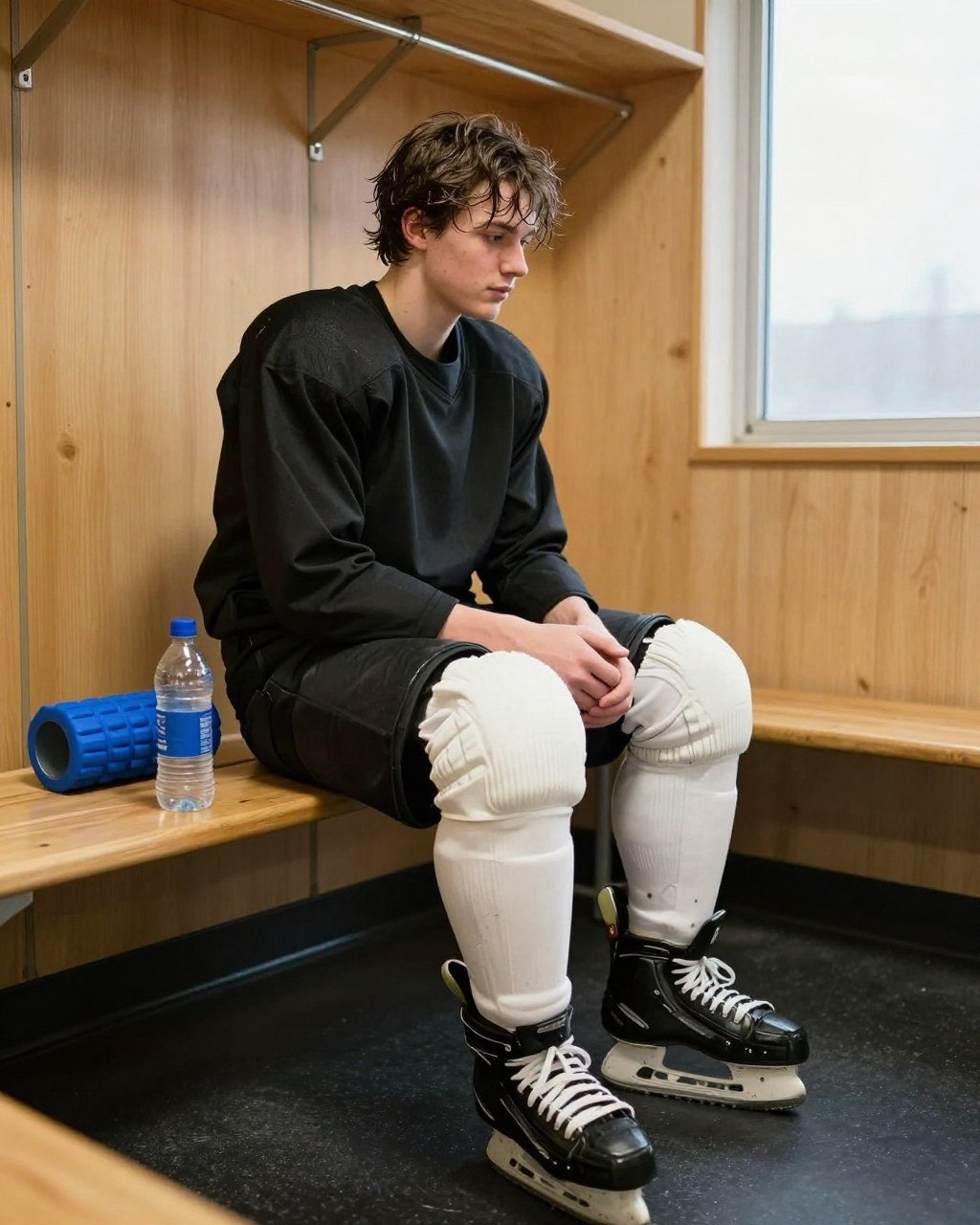
- Cool down for five to ten minutes. Skate easy laps or walk the hallway until breathing is close to normal. This brings heart rate down gradually and helps clear the heavy-leg feeling before stiffness sets in.
- Start drinking right away. Sip steadily rather than chugging. If the jersey was soaked through, choose a drink with electrolytes to replace sodium lost in sweat.
- Eat a small snack within 30 to 60 minutes. A banana, a granola bar, chocolate milk, or a yogurt gives tired muscles quick carbohydrate and protein. This window matters because muscle is most receptive to refueling soon after hard work.
- Change out of wet gear. Damp equipment cools the body fast and makes stiffness worse. Dry base layers and a warm jacket help the player stay loose on the drive home.
The Rest of the Evening
- Foam roll the big muscles for five to ten minutes. Work quads, glutes, and calves with slow passes. Keep pressure gentle; the goal is blood flow, not pain.
- Do light stretching for the hips, groin, and ankles. Hold each stretch for a calm count of 20 to 30 seconds. Never bounce.
- Eat a full meal with protein and carbs within a couple of hours. Eggs, chicken, rice, pasta, and fruit all do the job. This is the meal that repairs muscle.
- Get to bed on time. Lights out matters more than any gadget. A dark, cool room and no screens in the last hour help sleep come faster.
The Next Morning
- Check how the body feels during a normal warm-up. Smooth movement and full energy mean the player is likely ready. Lingering stiffness or a joint that hurts means another easy day.
- Walk or cycle easily for 15 to 20 minutes. Low-effort movement keeps blood flowing to sore legs without adding strain.
- Eat a normal breakfast with protein. Recovery continues well past the first evening.
Adjusting the Routine to the Schedule
A single routine does not fit every week. Use these variants:
- Same-day double (game or practice, then another session): Shorten the evening block to foam rolling, a snack, and an early bedtime. Skip the full meal if the next session starts within a few hours and eat a lighter carb-focused meal instead.
- Back-to-back games: Prioritize sleep and refueling over extra mobility work. Keep the morning walk short and skip any hard activity.
- Practice days: The full routine applies, but the evening meal can be lighter if the session was not maximal.
Watch out: stacking a full recovery routine on top of an already late night can backfire. If bedtime slips past the player’s normal window, cut the evening block short and protect sleep instead.
Here is the post-game routine in the order we recommend, with the timing for each step.
| Step | What to do | Time or frequency |
|---|---|---|
| Cool down | Skate easy laps or walk until breathing is close to normal | Five to ten minutes |
| Start drinking | Sip steadily; choose electrolytes if jersey was soaked | Right away |
| Small snack | Banana, granola bar, chocolate milk, or yogurt | Within 30 to 60 minutes |
| Change out of wet gear | Dry base layers and a warm jacket | After the session |
| Foam roll | Quads, glutes, and calves with slow, gentle passes | Five to ten minutes |
| Light stretching | Hips, groin, and ankles; hold, never bounce | 20 to 30 seconds per stretch |
| Full meal | Protein and carbs such as eggs, chicken, rice, pasta, fruit | Within a couple of hours |
| Next morning | Easy walk or cycle, then normal breakfast with protein | 15 to 20 minutes |
Active Recovery for Hockey Players: What Works and What Doesn’t
Active recovery for hockey players means low-effort movement on the day after a hard skate. Walking, easy cycling, and light swimming all work.
What does not work is turning a recovery day into another training day. Sprints, heavy lifting, and long scrimmages slow the body down.
A common mistake is skipping recovery days because a player feels fine. Soreness often shows up a day late.
Building a Hockey Recovery Day Workout
A hockey recovery day workout should feel easy from start to finish. The goal is movement, not fatigue. Plan for 20 to 30 minutes and keep the effort low.
- Start with a five-minute walk or easy spin.
- Add gentle mobility work for the hips and groin.
- Finish with light stretching and steady breathing.
For a full picture of how dryland days fit around recovery, our hockey dryland training guide shows young players how to build skating power and shooting strength safely away from the ice.
Mobility Work That Targets Skating Muscles
Skating loads the hips, groin, and ankles hard. These areas need attention on recovery days.
- Lateral lunges open the groin after a night of pushing off.
- Hip circles loosen tight hip joints.
- Ankle rocks keep the ankles moving for stride depth.
Move slowly in each drill. Stop before anything pinches or pulls.
Hockey Player Sleep and Recovery: The Foundation
Hockey player sleep and recovery are tied together more tightly than most families realize. Sleep is when the body repairs muscle and the brain locks in new skating and shooting patterns. Players who sleep well tend to show up sharper for training and games.
How Much Sleep Young Players Need
Youth athletes generally do best with a steady sleep window rather than a single number. A common pattern is 8 to 10 hours for school-age players, with bedtime and wake time held close to the same on weekends. The consistency matters as much as the total, because a shifting schedule makes Monday mornings feel like jet lag.
Building a Sleep Routine That Sticks
- Set a fixed lights-out time. Pick a time the player can hit even on game nights and keep it within 30 minutes on weekends.
- Keep screens out of the last hour. Bright screens delay the body’s sleep signal. Reading, stretching, or quiet conversation work better.
- Make the room dark and cool. A dark, cool room helps sleep come faster and stay deeper.
- Avoid heavy meals and caffeine late. Caffeine in soda or energy drinks can linger for hours and wreck the night’s sleep.
Naps After Morning Skates
A short nap after a morning skate can be valuable. A 20-minute nap can take the edge off heavy legs without wrecking the night’s sleep. Keep it short and early; a long or late nap makes bedtime harder. When a short nap is not enough to restore alertness, pairing consistent sleep habits with other recovery practices can support high performance, as explored at PureFitnessWarehouse.com.
Sleep and Readiness Monitoring
Sleep is the easiest recovery signal to track. A simple log of bedtime, wake time, and how rested the player felt on a one-to-five scale gives families a pattern to spot. If sleep drops for several nights in a row and the player reports heavy legs or flat energy, that is a signal to ease training load before a hard session.
Adjusting Sleep Around the Schedule
- Back-to-back games: Protect the night before the first game and treat the second night as non-negotiable. Skip optional evening activities.
- Early-morning practices: Move bedtime earlier rather than shortening sleep. A short nap later in the day can help.
- Travel days: Keep the same lights-out time where possible and bring a sleep mask for unfamiliar rooms.
Watch out: a player who needs an alarm to wake up most mornings and still feels tired is likely short on sleep, not short on discipline. Treat it as a recovery signal, not a character issue.
Hydration, Nutrition and Rest Days Across the Week
Hydration starts before the game, not during it. Players should sip water through the day and bring a bottle to every session.
Nutrition follows a simple rule: eat protein and carbs within a couple of hours of training. Eggs, chicken, rice, pasta, and fruit all do the job.
Rest days belong in every week, even during a busy season. One full easy day lets the body rebuild.
How to Tell When You Are Ready to Train Again
Readiness to train again comes down to how the body feels during a normal warm-up. If a player moves freely, has full energy, and feels no sharp pain, they are likely ready.
Use these checkpoints before a hard session:
- Warm-up feels smooth, not heavy
- No sharp pain in hips, groin, or ankles
- Slept well the night before
A nagging injury is a signal to back off. Our guide to injury prevention exercises for young players shows moves that lower the risk of re-injury before a player returns to full training.
Pairing Off-Ice Recovery With Skating and Shooting Development
Recovery is not the goal on its own. For a deeper look at building speed, read our guide on how to improve hockey skating speed.
At Pro Stride Hockey, we build recovery into the training picture.
If your player is ready to pair smart recovery with serious skill work, you can book skating treadmill training or explore our indoor shooting lane training to get started.
Recovery separates players who improve all season from players who fade by midwinter.
Frequently Asked Questions
How soon should hockey players start recovery after a game?
Start the first steps within 30 minutes of leaving the ice. That window is when refueling and rehydrating have the most impact, so aim for water, a snack with carbohydrate and protein, and a short cool-down walk before the drive home. The rest of the hockey recovery routine, including mobility work and sleep, can follow over the next few hours. Getting the early steps done consistently matters more than any single tool or supplement.
What is the best active recovery for hockey players?
Low-intensity movement that raises blood flow without adding fatigue works best. Walking, easy cycling, and light dynamic drills are the standard choices for active recovery for hockey players. Keep the effort easy enough that you could hold a conversation, and keep sessions short, around 15 to 30 minutes. Save sprints and interval training for training days. The goal is to help muscles feel looser, not to build fitness.
How much sleep do youth hockey players need to recover?
Most youth athletes need roughly 8 to 10 hours of sleep per night, and many fall short during busy tournament weekends. Sleep is the most reliable recovery tool available, so protect it: keep a consistent bedtime, dim screens an hour before bed, and avoid late-night caffeine. If a player is waking up tired after several nights, that is a signal to cut back on training load rather than add more recovery methods.
How many rest days should a hockey player take each week?
Plan at least one full rest day per week, and more during heavy tournament stretches. Rest days are not wasted days; they are when the body adapts to the work you have done. On a recovery day, keep activity light with a walk or gentle mobility work. If a player is still sore or sluggish after two easy days, that points to accumulated fatigue, and the right response is extra rest, not another hard skate.
