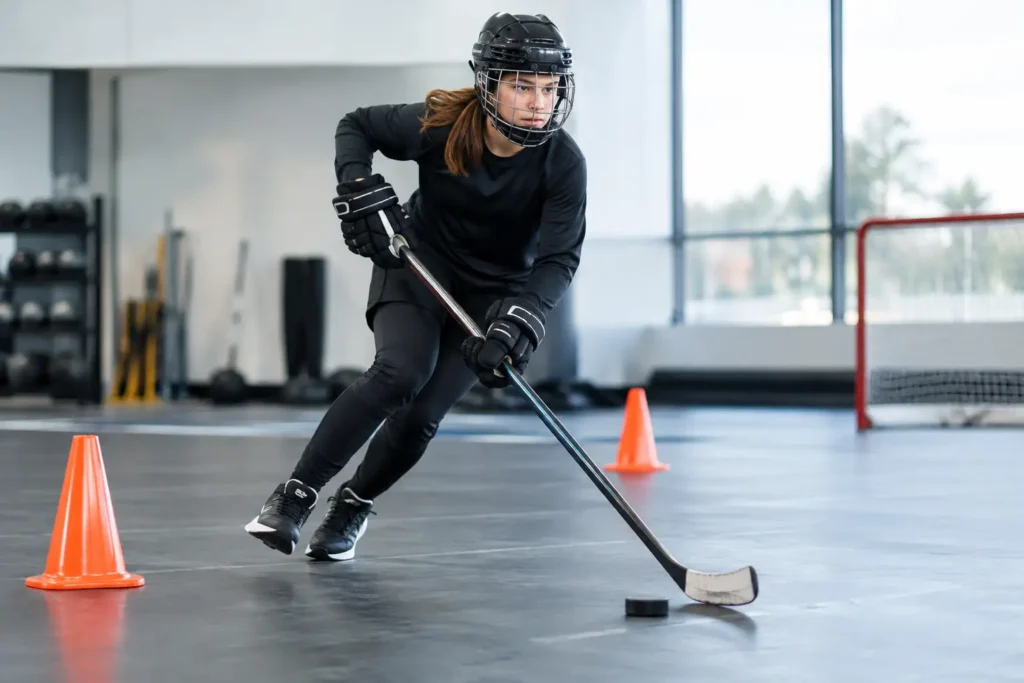
A player can work hard at every team practice and still leave without anyone correcting the detail that limits their stride, shot, or puck control. That is where junior hockey training creates real separation. Focused work away from the rush of a full practice gives young athletes the repetitions, coaching, and feedback required to turn effort into game-ready skill.
For parents, the goal is not to fill every open hour with more hockey. It is to make each training hour count. The best development plan builds better movement, cleaner mechanics, stronger decision-making habits, and confidence that carries onto the ice when the game speeds up.
Junior Hockey Training Is More Than Extra Reps
Repetition matters, but repetition without correction can reinforce the wrong pattern. A player who pushes straight back instead of driving laterally may work hard on every skate, yet continue to lose speed through inefficient mechanics. A shooter who opens the blade too early may take hundreds of pucks and still struggle to get the release off quickly.
Effective training identifies the cause before prescribing more volume. Coaches should watch how an athlete loads their edges, controls knee bend, transfers weight, moves their hands, and finishes a shot. From there, the player needs a simple correction, a clear demonstration, and enough quality reps to feel the change.
That process is especially valuable for youth players. Minor hockey practices must serve an entire roster, cover systems, and prepare for the next game. Individual technical correction often has to wait. Dedicated skill sessions create the time to slow a movement down, rebuild it properly, and then add pace and pressure as the athlete improves.
Start With Skating Mechanics
Skating is the foundation for almost every offensive and defensive play. A faster first three steps can help a player win a loose puck. Better edge control can create time on a breakout. A more stable body position can help an athlete protect the puck through contact instead of being pushed off it.
Good skating instruction goes beyond telling a player to “skate harder.” It looks at body angle, hip position, stride recovery, knee flexion, arm action, and the direction of force. Small changes can produce meaningful gains when they are repeated consistently. The work may feel unfamiliar at first, particularly when an athlete has relied on the same movement pattern for years. That is normal. Better mechanics need patience before they feel automatic.
A skating treadmill can be particularly useful because it creates a controlled environment for targeted stride repetitions. Athletes can see the movement, receive a correction, and apply it again right away without waiting for the next lap. The objective is not simply to move faster on the treadmill. It is to build a stride that transfers to acceleration, speed, and efficiency on the ice.
Train Shooting for Speed and Deception
Scoring more often is not only about having a harder shot. Junior players need to get the puck away before a goalie is set, disguise their release, and hit a target while their feet are moving. Those skills require sound shooting mechanics and a clear understanding of when each shot is useful.
Training should address grip, hand separation, puck position, weight transfer, blade control, and follow-through. A young athlete may need to begin with stationary technique, then progress to catching and releasing, shooting in stride, and changing the angle before the shot. There is a trade-off: adding speed too early can make form fall apart. Coaches need to challenge the player without allowing rushed reps to become their default.
A synthetic-ice shooting lane gives athletes a practical place to build that progression. They can take meaningful volume without the distractions of a crowded rink and receive direct feedback on where mechanics break down. Specialized shooting instruction also helps advanced players refine release speed and scoring tools without losing the fundamentals underneath them.
Feedback Turns Effort Into Improvement
Young athletes are not always able to feel what they are doing wrong. A player may believe they are getting low in their stride while video shows that their hips rise as they accelerate. Another may think their hands stay in front of the puck, only to see that their top hand collapses during the release.
Immediate video analysis makes those details visible. When an athlete sees the movement on a screen, hears one focused coaching cue, and tries it again within seconds, learning becomes far more concrete. The player is not guessing what to change. They understand the adjustment and can connect it to how the movement feels.
This is why coaching ratios matter. In a private setting, a 2:1 player-to-coach ratio and a maximum of four athletes allow instructors to observe each player closely. More attention does not mean constant criticism. It means the coach can recognize progress, correct the next priority, and keep the athlete engaged rather than overwhelmed.
At Pro Stride Hockey, that individualized approach is supported by a purpose-built 3,600-square-foot training center with a skating treadmill, immediate video feedback, a synthetic-ice shooting lane, and a skills area. The equipment supports the lesson, but the coach-athlete relationship remains the difference-maker. Tools provide information. Skilled coaching turns that information into better habits.
Designing Junior Hockey Training Around the Athlete
There is no single program that fits every player. An introductory athlete may need basic balance, agility, and puck-control confidence before worrying about advanced deception. A U15 player competing for a higher level may need explosive stride work, quicker release mechanics, and training that reflects game pace. A junior prospect may need a detailed plan based on the specific weakness that appears under pressure.
Start by identifying the highest-value need. For one player, that may be acceleration. For another, it may be improving shot mechanics after a growth spurt changed their coordination. Athletes returning from injury may need a patient rebuild of movement quality before chasing speed. The right plan meets the player where they are, then creates a pathway forward.
Consistency is more valuable than occasional marathon sessions. One focused hour each week, supported by short home practice habits, can create significant progress over a season. Players should leave each session with one or two clear points to work on, not a long list of corrections they cannot remember.
Training also needs to work with the team schedule. During a busy season, sessions may focus on maintaining movement quality, cleaning up a specific technical issue, and protecting energy for games. In the offseason, athletes can take on more technical volume, build strength and power, and make larger changes to their stride or shot. More training is not always better if sleep, recovery, school, and enjoyment begin to suffer.
Build Confidence Alongside Skill
Confidence is earned through preparation. When a player has practiced the same edge pattern, release, or puck-protection movement with quality feedback, they are more willing to try it in a game. They have evidence that they can execute it.
That confidence should not depend on perfect results. Missed shots, awkward reps, and temporary plateaus are part of development. The best young athletes learn to respond to correction, stay composed when a drill gets difficult, and return to the next repetition with intent. Those emotional skills matter just as much when the pressure rises late in a close game.
Choose a Setting That Makes Every Rep Count
Parents evaluating junior hockey training should look beyond a promising drill list. Ask whether the athlete will receive individual attention, whether coaches can explain the purpose behind an exercise, and whether progress is measured over time. A session should be challenging, but it should also be organized enough that players know what they are improving and why.
The strongest development environments pair high standards with encouragement. Players need to be pushed to move with more power, shoot with better mechanics, and stay disciplined through difficult repetitions. They also need coaches who notice growth, adapt instruction, and make advanced training feel attainable.
A better stride or quicker release rarely comes from one breakthrough session. It comes from purposeful reps, honest feedback, and the decision to return ready to improve one more detail.