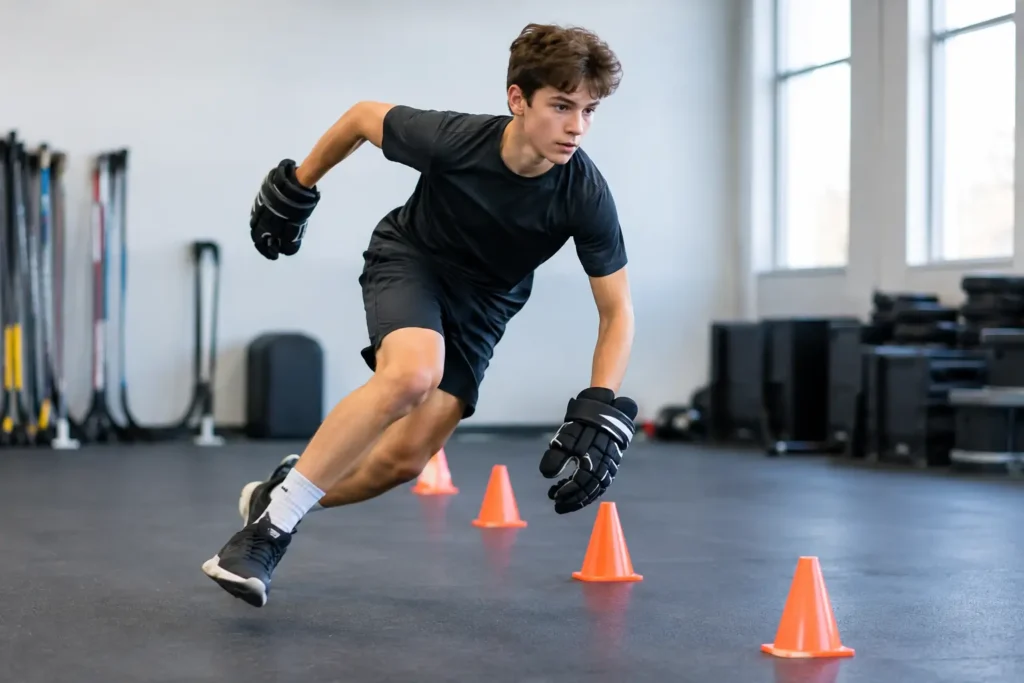
The first time a young player feels their edges grip through a tight turn, receives a pass cleanly, or gets a hard shot off without rushing, hockey becomes more fun. That confidence is not accidental. Strong beginner hockey development gives athletes a technical foundation they can trust when the game speeds up.
For parents, the goal is not to turn a first-year player into a finished product overnight. It is to help them build movement patterns, puck habits, and self-belief that make every future practice more productive. The right training environment meets an athlete where they are, corrects the details early, and challenges them without making the game feel overwhelming.
Start With Movement Before Flashy Skills
A beginner can score goals with enthusiasm and still carry skating habits that eventually limit their game. Short, choppy strides, an upright posture, weak knee bend, and poor edge control are common at the early stages. They are also highly coachable when addressed with patient instruction and purposeful repetition.
Skating is the engine behind every hockey skill. A player who can create power through the ice, control their body position, and recover quickly after a change of direction has more time to make decisions. That matters whether they are chasing a loose puck in novice hockey or learning to protect the puck along the boards years later.
Early skating work should focus on posture, balance, stride extension, edge awareness, stops, starts, and controlled turns. These skills do not need to be taught as one long lecture. Young athletes learn best when a coach demonstrates a movement, gives them a simple cue, and lets them repeat it enough times to feel the difference.
A skating treadmill can be especially valuable for this kind of learning. It allows athletes to isolate their stride in a controlled setting while a coach watches the mechanics closely. Instead of hoping a player understands what “push harder” means, the coach can identify where power is leaking from the stride – perhaps through a collapsed knee, a short extension, or an arm swing that disrupts balance.
Beginner Hockey Development Needs Clear Feedback
Team practices serve an important purpose, but they move quickly. A coach must manage a full roster, install drills, and keep players engaged. Most beginners will not receive enough individual feedback during a standard practice to fully change a skating or shooting habit.
That is where small-group and private instruction can make a meaningful difference. At Pro Stride Hockey, private sessions are kept at a 2:1 player-to-coach ratio, with no more than four athletes. This creates the time to observe, demonstrate, correct, and repeat without leaving a player to guess what needs to change.
Immediate video analysis adds another layer to the learning process. Young players often feel like they are doing exactly what a coach asked, but video can show them the gap between what they feel and what they are actually doing. Watching a stride on a 55-inch display, then trying the correction right away, helps turn an abstract instruction into something they can understand.
Feedback should stay specific and encouraging. “Get lower” is less useful than “keep your chest tall while bending through your knees.” “Shoot harder” is less useful than showing an athlete how their bottom hand guides the stick, how their weight shifts, and where the puck starts on the blade. Beginners do not need ten corrections at once. One or two priorities, repeated well, create real progress.
Repetition Is Valuable Only When It Has Purpose
More reps are not automatically better reps. If a player practices the same flawed movement hundreds of times, they can make that flaw harder to change later. Quality repetition means the athlete knows the objective, receives a correction when needed, and has enough time to apply it.
This is why a purposeful off-ice setting can be so effective. A synthetic-ice shooting lane allows athletes to take repeated shots without waiting for their turn in a line. A skills area creates space to work on puck control, deception, and body positioning. The athlete gets more touches, while the coach gets more opportunities to shape the details.
For a beginner, the best repetitions are often simple. Handle the puck with eyes up. Receive a pass with soft hands. Move the puck from forehand to backhand while staying balanced. Set the puck before shooting. These actions may look basic, but they are the building blocks for faster, more creative play later.
Build Shooting Mechanics Without Rushing the Result
Many young players want to shoot hard before they can shoot consistently. That is understandable. A loud puck off the boards or a top-corner goal gets attention. But power comes from position, sequencing, and efficient use of the stick – not from swinging harder.
Start with a stable stance and proper hand placement. From there, athletes can learn to load the stick, transfer weight, and release the puck with intent. The exact technique will depend on the player’s age, strength, equipment, and the type of shot being taught. A smaller athlete may need a different cue than a strong U15 player, even if both are working on a wrist shot.
Accuracy should remain part of the process. Beginners benefit from targets because targets give each shot a purpose. They also learn that scoring is not only about velocity. A quick release, a well-placed shot, or a shot taken in stride can be more effective than a harder puck that takes too long to set up.
Specialized shooting instruction can help athletes build these habits with a clear progression. The goal is not to copy one player’s style. It is to develop mechanics that fit the athlete and hold up when they are tired, moving, or under pressure.
Confidence Comes From Being Prepared
Confidence is often described as a personality trait, but for young hockey players it is usually built through evidence. A player becomes more willing to carry the puck when they have practiced puck protection. They become more willing to take a shot when they understand their setup. They become more willing to skate into traffic when their balance and edges feel dependable.
That confidence also grows when training is challenging but achievable. If every drill is too difficult, beginners can become hesitant. If every drill is too easy, they never develop adaptability. Good coaching adjusts the task: slow the movement down, reduce the number of variables, or add pressure once the athlete is ready.
Parents can support this process by praising effort and attention to detail rather than only goals or game points. Ask what the player worked on. Notice when they recover after a mistake. Celebrate the small signs of progress, such as a stronger stop, a more controlled turn, or a shot that comes off the blade cleanly.
A Practical Path for Young Players
A beginner does not need an overloaded weekly schedule. Development should fit the athlete’s age, team commitments, physical maturity, and enthusiasm for the game. One focused session each week can create momentum when it is supported by a simple practice plan at home and consistent effort at team practices.
A useful early progression is to establish skating fundamentals first, add puck control while moving, then introduce passing and shooting mechanics. Once those pieces are more reliable, athletes can work on reading pressure, changing pace, and applying skills in game-like situations. The order is flexible, but skipping the foundation usually makes advanced drills less effective.
Equipment matters, too. Sticks that are too long, too stiff, or poorly fitted can make puck handling and shooting more difficult. Skates that lack support or do not fit correctly can interfere with stride development. A coach can help identify whether a technical issue is truly a movement problem or whether equipment is contributing to it.
Keep the Long View in Focus
The strongest young players are rarely the ones who chase a new trick every week. They are the athletes who learn to enjoy disciplined work, accept coaching, and return to the basics when something breaks down.
Give your player a place to make mistakes, receive clear instruction, and try again with purpose. The next confident stride, clean pass, or well-placed shot is not just a small win – it is proof that steady work is carrying them forward.