Last Updated: November 5, 2026
Quick Summary
Private hockey training gives one player one-on-one coaching, while semi-private and group sessions share a coach to lower the price. Compare total session costs, including ice rental, facility fees and taxes, not just the coaching rate.
- Private sessions give one player full coaching attention, at the highest per-player cost.
- Semi-private sessions share a coach between two athletes with similar goals.
- Ask whether ice time, facility fees and taxes are included in the quoted price.
- Compare seasonal totals across frequency, format and session length, not single sessions.
- Ask how progress is measured and whether video or written feedback is included.
Table of Contents
- What Private Hockey Training Actually Includes
- Private, Semi-Private and Group Sessions Compared
- Understanding Your Hockey Training Session Cost
- Semi-Private Hockey Training for Shared Value
- Skating Treadmill Training as an Off-Ice Option
- Budget Scenarios by Age, Skill Level and Goal
- Questions to Ask Before Booking Your Next Session
- Frequently Asked Questions
What Private Hockey Training Actually Includes
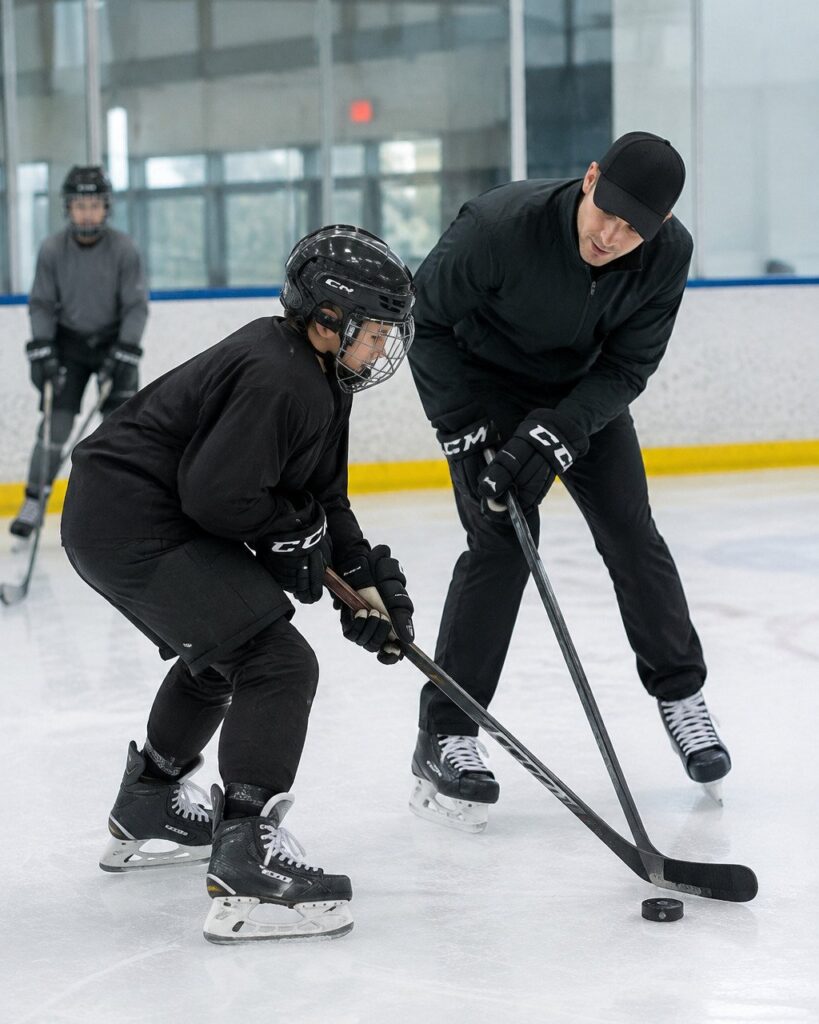
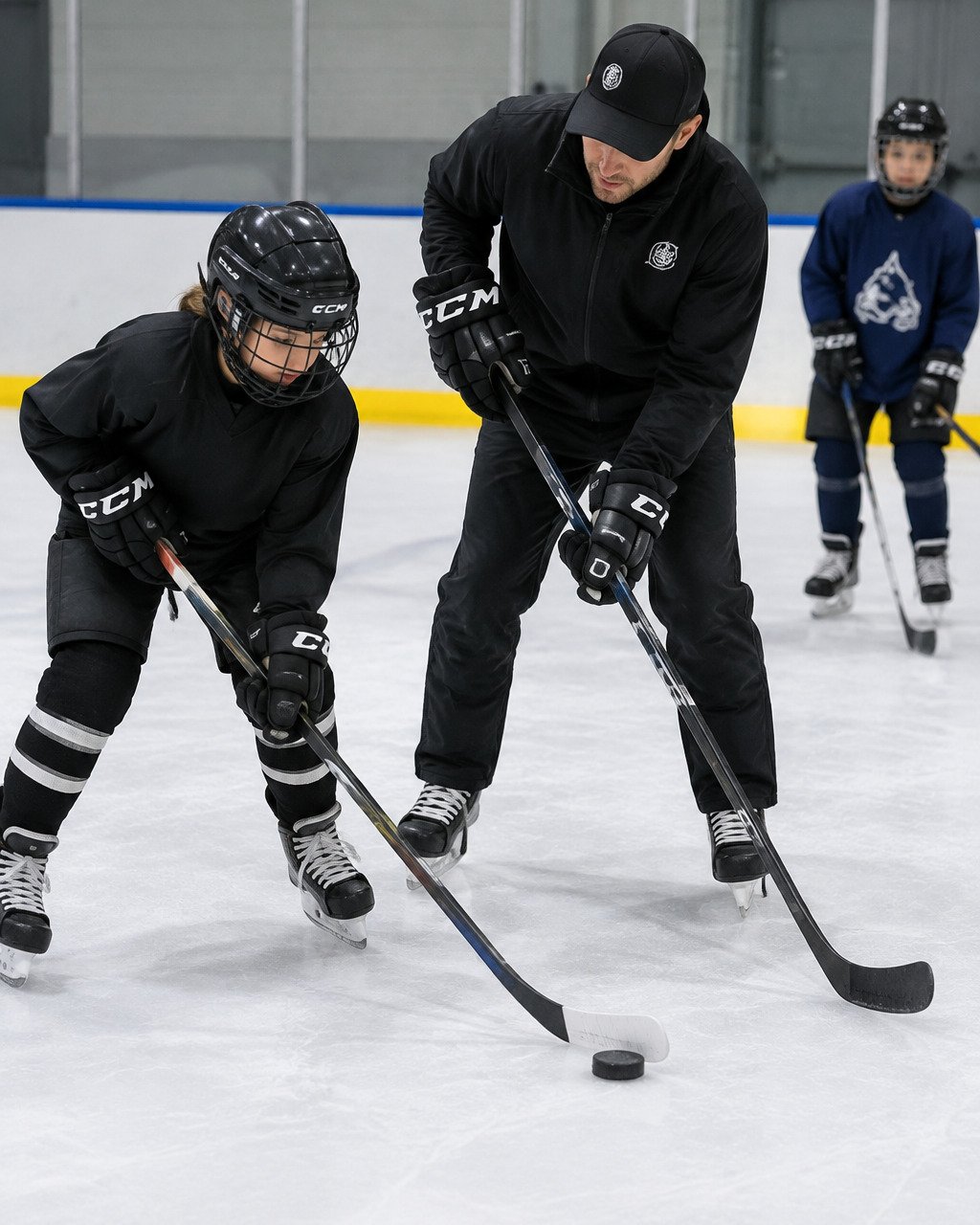
Private hockey training gives a single player one-on-one time with a coach, and that focus is the main reason families choose it. At Pro Stride Hockey, we run private sessions with a 2:1 player-to-coach ratio, so each athlete gets direct feedback on skating stride and shooting mechanics. You can see what a private lesson looks like locally before you book. Our skating treadmill sits inside those sessions, not beside them.
The format matters more than the label. A “private” lesson at one facility can mean something very different from one at another, so check what is included before comparing prices. Ask whether ice time is part of the fee, whether video review is included, and how long each session runs.
Before you compare anything, confirm these four details:
- Ice or treadmill time: Find out whether the rate covers the full session or just the coaching.
- Feedback method: Ask whether video review or written progress notes are included.
- Coach focus: Ask what the coach will work on in the first session and how progress is measured.
Private, Semi-Private and Group Sessions Compared
The three main formats trade cost against attention. Private sessions give the most coaching time per player. Semi-private sessions share one coach between two athletes. Group sessions spread the same coach across a larger team and usually cost the least per player.
| Format | Players per Coach | Coaching Focus | Best For |
|---|---|---|---|
| Private | 1 | Full attention on one athlete | Specific skill gaps, fast correction |
| Semi-private | 2 | Shared attention, peer drills | Budget-conscious players with similar goals |
| Group | 3 or more | Team-wide drills and game concepts | Team development, general conditioning |
Private training suits a player who needs to fix a specific habit, such as a weak shooting release or an inefficient stride. Group training works well for building general hockey sense and conditioning. Neither format is better in every case. The right choice depends on what the player needs to improve.
Per-Player Cost When Sharing a Coach
When two players share a coach, the per-player cost drops, but the coaching time per player also drops. The practical question is whether the lower price is worth the reduced individual attention. A simple way to compare is to divide the session fee by the number of players and then ask how many minutes of direct coaching each player receives.
For example, a 60-minute private session gives one player about 60 minutes of coached time. A 60-minute shared session gives each player roughly half that attention, even though the cost is lower. Compare the two based on coaching minutes per dollar, not just the sticker price.
Understanding Your Hockey Training Session Cost
A session’s total cost is the coaching fee plus any ice rental, facility charges and applicable taxes. Many families only compare the coaching fee and get a misleading result. A lower hourly rate can end up costing more once ice time and fees are added.
Start by writing down each cost component for every option you are considering. Then calculate the total for one session and for a full season. This gives a fair apples-to-apples comparison.
Ice Rental, Facility Fees and Taxes
Ice rental is often billed separately from coaching, which is why sticker prices can mislead. Facility fees may apply on top of both. Taxes depend on the type of service and how it is billed, so confirm the final amount before booking. Ask the provider for an itemized quote that shows the coaching fee, ice or facility charges and taxes as separate lines.
Semi-Private Hockey Training for Shared Value
Semi-private hockey training works best when two players have similar skill levels and goals. Two players working on shooting accuracy, for example, can push each other through repetitions while still getting coaching feedback. Mismatched skill levels tend to frustrate the stronger player and overwhelm the weaker one.
Shared sessions also reduce the cost of consistent training. A player who trains twice a week in a semi-private format may spend less over a season than a player who trains once a week privately. Compare the total season cost for the same number of sessions before deciding.
Skating Treadmill Training as an Off-Ice Option
Skating treadmill training lets players work on stride technique without ice time. At Pro Stride Hockey, we use the treadmill to focus on stride technique. It complements on-ice practice rather than replacing it.
The treadmill is most useful for players who want to repeat specific stride patterns many times in a session. Check whether the treadmill sessions are priced separately from on-ice coaching before you compare options. Comparing how each session uses its time on the treadmill can clarify what you value when choosing a coach, whether on the ice or on the golf course.
Budget Scenarios by Age, Skill Level and Goal
A training budget is easier to set when you build it from frequency and format rather than from a single session price. The framework below uses placeholder amounts (shown as F for a session fee) so you can drop in real quotes and see the seasonal total before you commit.
Start with three inputs: how many sessions per week, how many weeks in your season, and which format (private, shared, group or off-ice treadmill). Then multiply: weekly sessions × weeks × cost per player per session = seasonal cost per player. Add travel, equipment replacement and any assessment or registration fees the provider charges.
Developing player, general skills (younger age group). The priority is repetition volume and fun, not individual correction. A mix of one group session and one off-ice treadmill session per week keeps the per-player cost low while building stride fundamentals and shooting mechanics. Seasonal cost is driven mostly by frequency, so a twice-weekly group plan usually costs less per player than a once-weekly private plan at the same total session count.
Competitive player with a specific weakness. The priority is targeted correction, so private or 2:1 sessions earn their higher per-player cost. A common pattern is a short block of private sessions focused on one skill, stride push-off angle, weight transfer, or shooting release, followed by group or shared sessions to reinforce it. Budget the block as a fixed number of sessions rather than an open-ended weekly habit, and set a review point at the end of the block.
Ringette player working on skating and ring release. Ringette rewards stride efficiency and a quick, accurate release under pressure. Off-ice treadmill work builds the stride pattern without ice time, and shooting instruction teaches the release mechanics. A weekly combination of one off-ice session and one shared on-ice or shooting session balances cost with the specific skills the sport demands.
Adult or recreational player. The goal is fitness and enjoyment, so shared sessions and off-ice treadmill work usually give the best cost-to-benefit ratio. Frequency matters more than format here; two shared sessions per week often cost less per player than one private session and deliver more total training time.
Across all four scenarios, the same levers move the budget: frequency, format, session length, and whether ice or facility fees are bundled into the session fee. A lower per-session rate at higher frequency can cost more over a season than a higher rate at lower frequency, so always compare seasonal totals, not single sessions.
Watch out: seasonal budgets drift when travel and equipment are left out. Track fuel, parking, tournament travel and skate or stick replacement alongside session fees so the seasonal figure reflects what you actually spend.
Set a review point every four to six weeks. If the player is not showing measurable change in the targeted skill, stride length, push-off power, shooting accuracy or release speed, adjust the format or frequency rather than simply adding sessions. Matching the budget to a measurable goal is what separates a plan from an expense.
Questions to Ask Before Booking Your Next Session
Before you commit to any program, ask these questions:
- What is the total cost per session, including ice, facility fees and taxes?
- How many players share the coach, and how is coaching time divided?
- How long does each session run, and how many sessions are recommended per week?
- How is progress measured, and will we see video or written feedback?
- What is the cancellation or rescheduling policy?
- Is there a package or multi-session option, and how does it change the per-session price?
Get clear answers in writing. A provider that explains the full cost and the training method openly is easier to compare fairly. Current pricing and package details are available on the Pro Stride Hockey website, or you can request a quote directly from our team.
Frequently Asked Questions
How much do private hockey training sessions cost?
Pricing depends on session length, the coach, the facility and whether you book a package. Pro Stride Hockey does not publish fixed rates in this article, so check the website or request a quote for current pricing. When comparing options, convert every quote to a per-player, per-hour figure, and include ice rental, facility fees and taxes so the totals match.
Are private hockey lessons worth the cost?
Private lessons tend to deliver the most individual feedback because the coach can focus on one player’s stride, shot and decision-making. Whether that justifies the price depends on the goal. A player working on a specific technical gap often gets more value from a focused session than from a larger group, while a player who mainly needs game repetition may get more from a team setting.
Is private or group hockey training better for skill development?
Private training gives more coach attention per player, which helps with technique corrections such as skating stride or shooting mechanics. Group training gives more repetitions with teammates and more game-like movement. Many families combine both, using a smaller session for technique and team practice for game application.
What should I ask before booking a hockey training session?
Ask what the session length is, how many players share the coach, what the coach’s background is, and whether ice rental or facility fees are included in the price. Also ask how progress is tracked and whether a package or multi-session discount applies. These answers make it easier to compare two quotes on equal terms.
