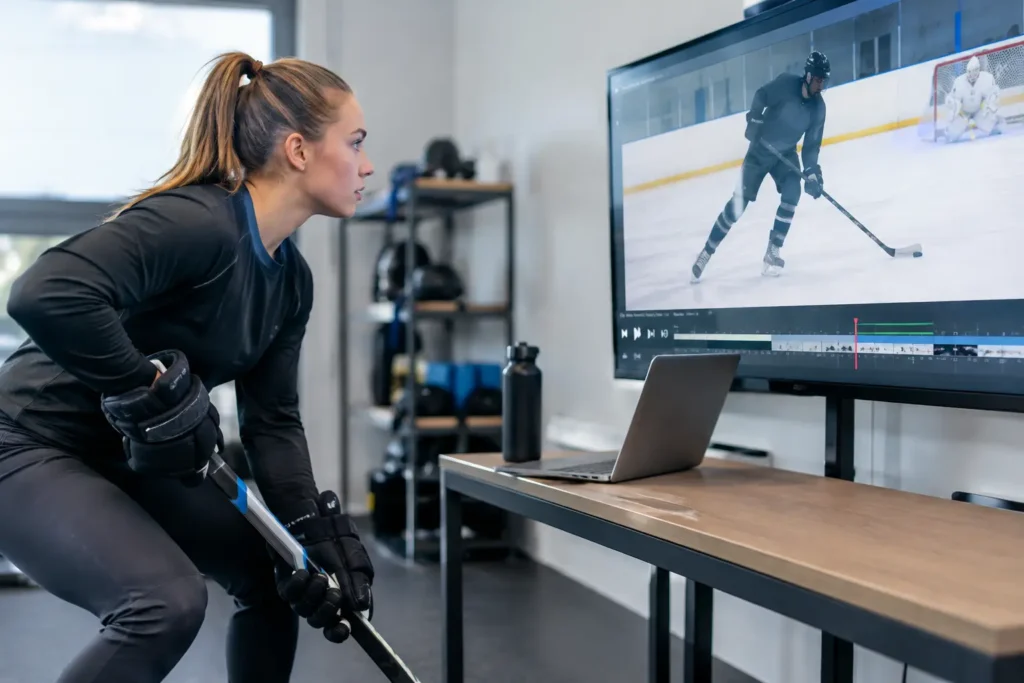
A player can feel fast and still leak power with every stride. A shooter can hit the net in practice and still lose velocity because the hands, hips, and weight transfer are out of sequence. Hockey video analysis training makes those details visible, then gives athletes a clear plan to correct them.
For young players, that clarity matters. “Keep your knees bent” or “get lower” can be useful coaching cues, but they are difficult to own when an athlete cannot see what their body is doing. Video turns a general instruction into a specific adjustment: lower the hips before the first push, recover the skate under the body, keep the stick loaded longer, or finish the shot through the target.
At Pro Stride Hockey, video is not used to point out mistakes and move on. It is part of a repeat-correct-repeat process built around stronger mechanics, more efficient movement, and confidence that carries back to the ice.
What Hockey Video Analysis Training Shows
The best video feedback does more than replay a rep. It helps a coach slow down a movement, identify the reason behind the result, demonstrate the correction, and let the player immediately try it again. That sequence is especially valuable for skating and shooting because both skills happen quickly and involve several body positions working together.
A skating clip may reveal that an athlete is pushing backward rather than to the side, standing too tall through the stride, or allowing the recovery skate to swing wide. Each issue costs efficiency. The player may work hard and look busy, yet struggle to create the force needed for acceleration and top-end speed.
A shooting clip can show whether the player is transferring weight from the back leg to the front leg, creating stick flex, keeping the hands away from the body, and finishing with intent. A shot is not just an arm movement. Power starts from the ground and travels through the legs, hips, core, hands, and stick. When one link is late or disconnected, the puck loses pace.
For parents, video also offers something team practices often cannot: a visible explanation of what is being trained and why. Improvement becomes easier to recognize when athletes can compare their movement patterns over time rather than relying only on how a skill feels.
Why Immediate Feedback Changes Skill Development
Delayed feedback has limits. If a player watches a clip after a full session, they may understand the correction but have missed the chance to connect it to the physical sensation of the rep. Immediate review keeps the movement fresh.
A coach can show an athlete one key detail on a large display, provide a simple cue, and send them back into the next repetition with a specific purpose. The athlete learns to connect what they see with what they feel. That is where technical instruction becomes body awareness.
This does not mean every rep needs a screen. Too much analysis can slow a session down and make a player overthink. The right approach is selective. Coaches should identify the one change that will have the biggest impact, let the athlete repeat it, then revisit the video to confirm whether the adjustment is holding.
For a younger athlete, the focus may be posture, balance, and a clean skating recovery. For an advanced player, it may be the timing of the first three steps, the angle of force production, or the mechanics of a deceptive release. The coaching standard is the same: meet the player where they are, then give them the next useful step.
Hockey Video Analysis Training for Better Skating
Skating is the foundation of nearly every outcome in hockey. A player who gains a step reaches loose pucks first, creates separation, recovers defensively, and has more time to make decisions. But speed is not simply about trying harder. It depends on efficient mechanics and repeated practice under qualified coaching.
Video analysis can help break skating into teachable components. Coaches can look at body position, knee and hip flexion, stride direction, recovery path, arm action, and upper-body control. They can also evaluate starts, crossovers, transitions, and stopping mechanics rather than treating skating as one general skill.
Consider an athlete whose first few steps look short and choppy. The issue may not be effort. The player may be rising out of their stance before they can create force, or placing the recovery skate too far outside the body. Seeing that movement helps the athlete understand why a deeper, more controlled position creates a stronger push.
A skating treadmill adds another advantage. It allows players to work through repeated stride cycles without chasing a puck or waiting for a drill to reset. With a coach nearby and video available immediately, the athlete can make a correction, repeat the movement, and build the pattern through purposeful repetitions.
The goal is not to make every player look identical. Athletes have different body types, strength levels, and developmental stages. The goal is to help each player develop a more powerful, balanced, and efficient stride that supports their game.
From Correction to Confidence
Players often become frustrated when they know they need to skate faster but do not know what to change. Video gives them a reference point. Instead of hearing that they need “more power,” they can see the adjustment that creates it.
That clarity builds confidence. A player who understands their mechanics is more likely to commit to a new movement, stay patient through the learning process, and bring the skill into game situations. Confidence is not empty praise. It is earned through evidence, repetition, and the ability to feel progress.
Shooting Mechanics Become Easier to Coach
Shooting instruction benefits from the same level of detail. A puck that floats, sails high, or lacks consistency usually tells a story about the player’s setup and sequence. Video helps coaches find that story quickly.
For example, a player may pull the puck back too far, release it behind the front skate, or collapse the top hand into the body. Another may have good hand speed but never load the stick because their weight stays on the back leg. These are small mechanical issues, but they create major differences in shot velocity, accuracy, and deception.
In a synthetic-ice shooting lane, athletes can work on those details without the distractions of a full practice. They can rehearse a wrist shot, snapshot, or quick-release sequence, watch the movement, receive a correction, and repeat it with intention. The process makes practice more demanding, but also more productive.
There is a trade-off: technical shooting work should not replace game-like decision-making. Players still need to read pressure, change release points, and shoot from uncomfortable positions. Video-based mechanics training gives them a stronger base so those game skills have more power behind them.
How Parents Can Measure Meaningful Progress
Parents should not expect every session to produce a dramatic visual change. Quality movement takes time, especially when athletes are replacing habits they have used for years. A player may initially look less comfortable while learning a new skating position or shooting sequence. That can be a normal part of development.
Meaningful progress often appears in layers. First, the athlete understands the correction. Next, they can perform it in a controlled setting. Then they repeat it with less coaching. Finally, the new pattern begins to show up under speed, fatigue, and game pressure.
Look for more than highlight-reel results. Is the player getting lower into the first steps? Is the recovery skate cleaner? Is the shot leaving the blade with a more consistent release? Are they asking better questions and taking ownership of their development? Those changes point to skills that can last.
A strong training environment also keeps communication simple. Players need enough information to improve, not a lengthy mechanical lecture after every rep. Parents benefit from knowing what the athlete is working on, what progress looks like, and how to reinforce patience between sessions.
Video Is a Tool, Not the Whole Program
Video cannot replace a coach’s eye, individualized instruction, or hard work from the athlete. A screen can identify a movement pattern, but a skilled coach explains the cause, selects the right drill, and adjusts the progression when a player is not ready for the next step.
The most effective hockey video analysis training combines technology with small coaching ratios and meaningful repetitions. It gives players direct feedback without making training feel complicated. It challenges advanced athletes while giving younger players a supportive place to build strong fundamentals.
The next time a player says they want more speed or a harder shot, start with a better question: what is their movement actually showing? The answer can turn one focused correction into a more powerful stride, a cleaner release, and a player who trusts the work behind their progress.