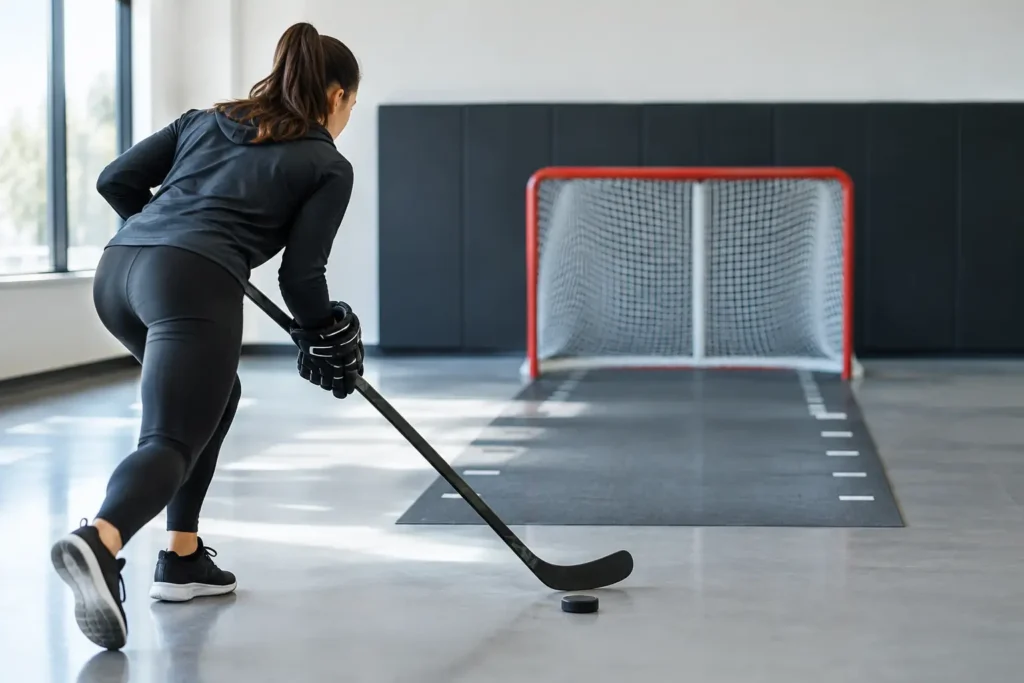
A game can turn on one release: a puck that comes off the blade cleanly, gets through traffic, and arrives before the goalie is set. An indoor hockey shooting lane gives players the space to build that release on purpose. It is not simply a place to fire pucks. Used correctly, it is a controlled training environment where athletes can refine mechanics, develop scoring habits, and turn quality repetition into confidence.
For young players, team practices rarely provide enough individual shooting volume or technical feedback. Players may take a few shots in a drill, then move on. In a dedicated lane, the work can slow down long enough for a coach to identify what is happening at the hands, blade, puck, hips, and feet – then help the athlete correct it before poor habits become automatic.
Why an indoor hockey shooting lane matters
Shooting is a full-body skill. A harder shot does not come from swinging the stick harder. It comes from sequencing: loading through the legs, transferring weight, creating flex in the stick, moving the hands efficiently, and finishing with a purposeful release. The same is true for deception. A player who can change the puck angle, alter the release point, or shoot while moving their feet becomes much harder to defend.
An indoor shooting lane makes those details easier to see and repeat. The surface is consistent, the player has room to work, and there is no need to wait for the next whistle. That consistency matters because athletes improve when they can connect a coaching cue to the next repetition immediately.
For parents, the value is in more than puck count. Productive shooting training gives an athlete a clear focus. Instead of firing 100 pucks with the same flaw, they can perform purposeful repetitions with a specific outcome: keeping the bottom hand active, transferring weight toward the target, pulling the puck into the shooting lane, or releasing the puck without telegraphing the shot.
What players should train in a shooting lane
A well-run shooting session should match the athlete’s age, strength, current mechanics, and game needs. An introductory player may need to learn how to hold the stick properly and make consistent contact with the puck. A U15 player or junior prospect may be focused on quicker releases, shooting off imperfect passes, and creating power under pressure.
Mechanics before maximum power
The wrist shot is often the starting point because it teaches the building blocks of an effective release. Players learn to begin with the puck loaded behind the body, lead with the top hand, use the lower hand to apply pressure into the stick, and finish toward the target. When those pieces work together, the stick does more of the work.
A snapshot adds speed and game relevance. The puck starts closer to the body, the release is shorter, and the athlete must load the stick quickly without a large windup. Slap shots can also be valuable for older players, especially defensemen, but they should not become the default focus for athletes who still need a reliable, accurate wrist or snap shot.
Power matters, but accuracy and release speed often matter more in game situations. A shot that misses the net creates no rebound, no screen, and no chance to score. Players should learn to pick targets, change locations, and understand when a low shot creates a better scoring opportunity than trying to hit the top corner.
Puck movement and deception
The best shooters do not place the puck in the same spot every time. They move it away from pressure, change the release point, and force goaltenders to reset. In an indoor lane, players can practice pulling the puck laterally before shooting, dragging it around an imagined defender, or receiving a pass and getting the puck off the blade quickly.
This is where training needs to stay honest. Stationary shooting creates a foundation, but hockey is played with movement, pressure, and imperfect puck placement. Once a player owns the basic pattern, the drill should progress. Add foot movement. Add a pass. Add a target sequence. Create a time limit. Ask the athlete to make a decision before releasing the puck.
Shooting from game positions
A forward benefits from practicing shots from the slot, off the rush, below the hash marks, and around the net. A defenseman needs repetitions that reflect blue-line puck movement, one-timers, quick releases through traffic, and shots designed for tips or rebounds.
The goal is not to memorize one perfect shot. It is to build adaptable mechanics that hold up when the puck is on the heel, the player is slightly off balance, or a defender closes space. Those are the moments that show whether a skill truly transfers.
Repetition only works when feedback is specific
More reps are not always better reps. If an athlete consistently opens the blade too early, shoots off the back foot, or lets the top hand collapse toward the body, hundreds of uncontrolled shots can reinforce the problem.
That is why coaching matters. A coach can observe the movement, explain the correction in language the athlete understands, demonstrate the desired pattern, and give the player one clear task for the next set. For example, rather than saying “shoot harder,” the instruction might be to get the puck farther back, drive through the front leg, and finish the blade toward a selected target.
Immediate video analysis adds another level of clarity. Young athletes often feel like they are doing what the coach asked, but video can show the difference between what they felt and what actually happened. A short clip on a large display helps players recognize details such as hand position, weight transfer, stick angle, and release point. It also gives parents a more visible connection between the work being done and the progress being made.
Build a shooting session around a purpose
A productive indoor hockey shooting lane session does not need to be complicated. It needs a clear progression. Start with a short movement and puck-control warmup, then establish one technical focus. From there, build from controlled shooting into game-like execution.
For a player working on a quicker snapshot, that may mean beginning with stationary releases, then adding a lateral pull, then receiving a pass, and finally shooting after moving the feet. The technical cue stays consistent while the demand increases.
Volume should fit the athlete. Younger players need enough repetition to learn, but not so much that fatigue causes their posture and mechanics to fall apart. Older players can handle more demanding sets, especially when the work includes conditioning, decision-making, and competitive targets. Quality should remain the standard at every age.
At Pro Stride Hockey, the purpose-built synthetic-ice shooting lane allows athletes to train these details with room to repeat, adjust, and progress. Small coaching ratios create time for individual correction, while immediate video feedback helps players understand exactly how to improve their release.
Equipment can support better habits
A shooting lane is only as useful as the athlete’s setup and intent. Players should train with a stick that is appropriately sized and flexed for their strength and technique. A stick that is too stiff may make it difficult for a younger player to feel the load and release. A stick that is too whippy can hide poor mechanics or create inconsistency.
The blade pattern also affects puck control and shot selection, but it does not replace sound technique. Players should avoid chasing equipment changes when the real issue is body position, hand placement, or puck location. The right stick supports development; it does not create it.
Training pucks, targets, and passers can all add value, especially when they create an objective. Still, equipment should serve the drill. If a target encourages a player to stare at the net and ignore their mechanics, it may be time to simplify and reset.
Confidence is earned one clean rep at a time
Players often become more willing to shoot in games when they trust their release. That trust does not come from being told to shoot more. It comes from repeatedly seeing the puck come off the blade correctly, hitting intended areas of the net, and learning how to recover when a rep is not perfect.
An indoor shooting lane gives athletes a place to make mistakes without the pressure of a scoreboard. They can test a new release, work through frustration, accept coaching, and try again. Those are performance skills as much as technical skills.
The best shooting work leaves a player with a simple next step: one detail to own, one game situation to recognize, and one reason to believe the next puck can be a better one.